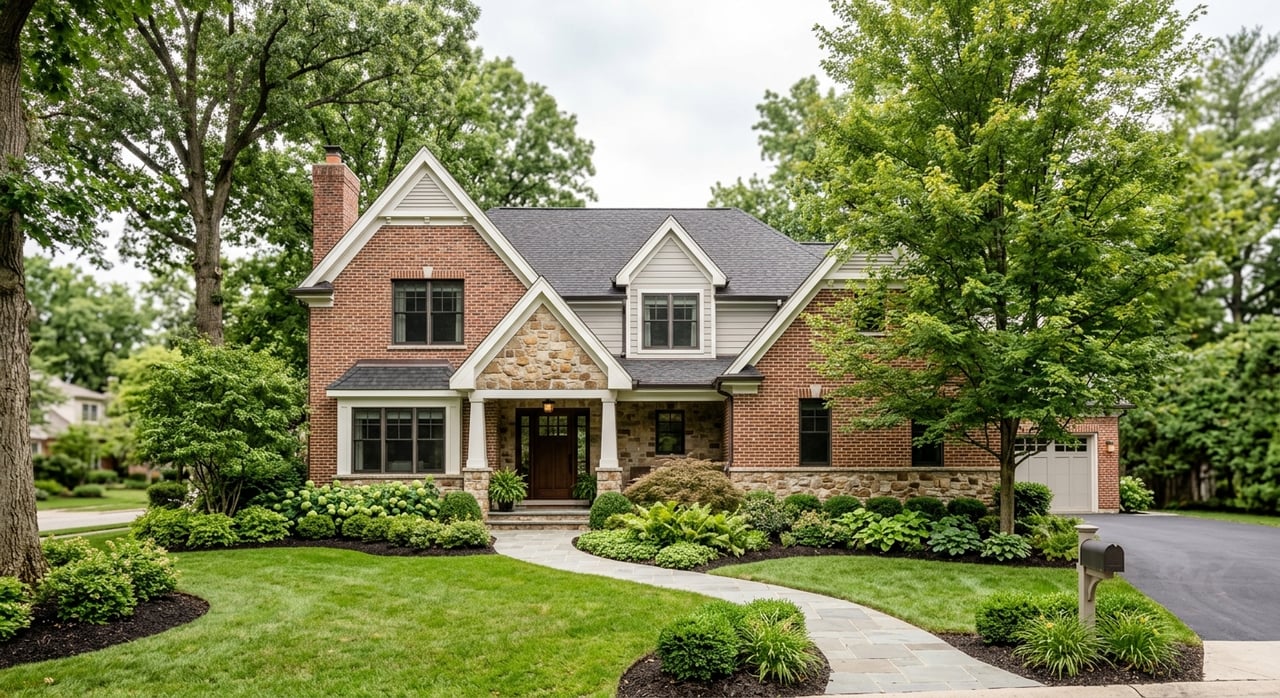
If you are thinking about investing in Batavia real estate, you are probably asking a simple question: does this market offer steady opportunity, or is it already too competitive? The honest answer is that Batavia can offer both stability and upside, but only if you understand how the city’s housing stock, neighborhood patterns, and local rules shape each deal. In this guide, you will get a practical look at what matters most before you buy, hold, renovate, or resell in Batavia. Let’s dive in.
Why Batavia draws investors
Batavia offers a suburban market with a strong owner-occupied base, which often appeals to investors looking for stability. The U.S. Census Bureau estimates 26,555 residents in 2024, and 77.7% of housing units are owner-occupied. The median value of owner-occupied homes is $358,000, and median household income is $119,167.
That profile matters because it points to a city where many households are putting down long-term roots. CMAP reports 10,378 households with an average household size of 2.6, which supports the idea of Batavia as a family-sized housing market rather than a high-turnover rental market. For investors, that can mean more predictable demand, but it can also mean stronger competition when well-positioned homes hit the market.
Batavia’s economy also supports housing demand from more than one direction. The city says there are more than 1,200 businesses in Batavia, including Fermilab, Aldi’s U.S. headquarters, and Suncast. Resident employment is spread across education, professional services, health care, manufacturing, and retail, with work destinations including Batavia, Aurora, Geneva, St. Charles, Chicago, and Elgin.
Batavia housing stock at a glance
Batavia is still mostly a single-family market. CMAP reports that 68.2% of housing units are single-family detached, 10.1% are single-family attached, and only 9.7% are in buildings with 20 or more units. If your investment strategy centers on suburban houses rather than large multifamily buildings, Batavia lines up well with that approach.
The age of the housing stock creates both opportunity and complexity. The median year built is 1985, with 17.0% of homes built before 1940 and 38.9% built from 1990 to 2009. In practical terms, you may find older homes with renovation potential in some areas and newer subdivision properties that may be easier to maintain in others.
The homes also tend to be larger and more family-sized. CMAP notes that 34.4% of units have four bedrooms, and the median number of rooms is 6.9. That can influence both resale strategy and rental demand, especially if you are underwriting a property for households that want extra bedrooms, office space, or flexible living areas.
Batavia is not one uniform market
One of the biggest mistakes investors make is treating an entire city as if every block behaves the same way. In Batavia, neighborhood differences matter. Realtor.com neighborhood data shows listing-price variation from about $210,000 in Pigeon Hill to about $659,900 in Stonebridge, with other areas falling in between.
That does not mean one area is automatically better than another. It does mean your exit strategy, renovation budget, and expected buyer or renter profile should match the submarket you are targeting. Older-core neighborhoods, mid-price sections, and premium pockets can perform very differently even within the same city.
Batavia’s GIS resources also reinforce the importance of micro-level research. The city maps include zoning overlays, subdivisions, the downtown historic district, and four TIF districts. Before you commit to a purchase, it is worth confirming exactly how the property fits into its immediate area, not just the Batavia market overall.
Rental hold or flip?
For many small investors, the practical question is whether Batavia works better as a long-term hold market or a flip market. The answer depends on the property, the location, and your execution. Current market signals suggest Batavia can support both, but the risk profile is different for each.
Redfin reported a median sale price of $474,900 in March 2026, up 20.2% year over year, with 37 median days on market and a 101.2% sale-to-list ratio. Realtor.com reported a median listing price of $525,000 and 25 median days on market, while Zillow reported an average home value of $453,319 and homes going pending in about 4 days. These sources measure different things, so they are best used as broad market context rather than one-to-one valuation tools.
When a flip may make sense
A flip can work well when you find a property that needs cosmetic or manageable value-add updates in a location with clear buyer demand. In a relatively fast-moving market, updated homes that are priced in line with neighborhood expectations may attract strong attention. That can create opportunity if your renovation scope is realistic and your timeline is tight.
The caution is that deeper rehabs can get expensive fast. Older homes may bring more permit needs, more unknowns behind walls, and more carrying costs while the work is underway. In Batavia, that means your budget needs room for municipal review time and not just labor and materials.
When a rental hold may make sense
Batavia also has meaningful rental demand, but citywide rent figures should be used carefully. The Census Bureau reports median gross rent of $1,255, while Realtor.com showed a median asking rent of $2,075 with 10 rental listings in March 2026. Because those numbers are measured differently, a property-specific rent comp analysis is usually more useful than relying on one citywide median.
A hold strategy may be especially practical for homes that match common local needs. Batavia households are car-oriented, and CMAP reports that 43.6% have two vehicles while 21.7% have three or more. Off-street parking, garage space, and practical commute access are likely to matter more than walkability alone for many tenants in this market.
What renters and buyers may value most
Batavia’s commuting patterns give you a useful clue about real-world demand. CMAP shows 67.8% of workers drive alone, 21.2% work from home, and the mean commute is 28.9 minutes. That suggests many households may place a premium on layout, parking, storage, and easy access to regional job centers.
School assignment can also affect how some buyers and renters evaluate a property, but it should always be treated carefully and factually. Batavia Public School District 101 serves pre-K through 12 and reports about 5,170 students, a 17:1 student-to-staff ratio, average class size of 23, and 82% post-secondary experience among the Class of 2025. The district is also moving to full-day kindergarten in 2026-27, and school boundaries are address-based and subject to change, so each property should be verified individually.
If you are buying a hold property, these details can help you think about likely use patterns. Extra bedrooms, a dedicated office, a functional yard, and a garage may fit local demand better than flashy upgrades that do not improve day-to-day living. In Batavia, practical livability often matters as much as design.
Zoning and use rules to check first
Before you buy any investment property in Batavia, confirm what the zoning allows. The city’s single-family districts range from R0 to R1-H, with minimum lot sizes from 14,000 square feet down to 5,000 square feet. The zoning code also shows that some districts may allow secondary dwelling units under certain conditions.
That is important because the same investment idea may work on one parcel and not on another. If you are considering a house with a future accessory unit angle, a lot split possibility, or a different occupancy plan, you need parcel-specific verification before underwriting the deal.
Short-term rental plans deserve extra caution. Batavia’s zoning glossary classifies short-term rental or leasing of single-family homes, condominiums, townhouses, and loft units for less than 30 days as hotel or commercial lodging use. If your strategy depends on furnished short stays instead of a conventional lease, that classification could change the entire deal.
Renovation and holding costs to build in
Permit timing is part of the investment math in Batavia. The city’s One Stop portal includes renovation permits for projects such as roofs, siding replacement, windows or doors, and water heaters. The city also emphasizes zoning and property-maintenance compliance, which means renovation timelines should include municipal review and approval time.
Taxes and recurring operating costs also deserve attention. Kane County assesses properties under Illinois law and equalizes assessments when needed, and Batavia Township’s 2025 residential and commercial equalization factor was 1.0878. Batavia also requires refuse and recycling service, and all households rent Groot carts, which adds another operating cost to your monthly numbers.
These costs are not dramatic on their own, but together they can change your net yield. A hold that looks solid on a top-line spreadsheet can feel much tighter once taxes, trash service, maintenance, vacancy, and turnover costs are included. Conservative underwriting matters here.
Why river and downtown properties need extra diligence
Some of Batavia’s most interesting properties sit near the Fox River or close to downtown. These locations can benefit from character, central access, and public investment, but they also call for deeper due diligence. The city maps include FEMA maps, and Batavia provides stormwater and flooding reporting channels.
That does not mean river-adjacent property is automatically a bad investment. It means you should pay close attention to drainage, stormwater history, and insurance considerations before moving forward. Older sections of town can also bring added renovation complexity, especially if design rules or district context come into play.
Downtown and near-downtown areas may also be influenced by city planning activity. Batavia says its Downtown Plan is part of the comprehensive plan, it adopted the Fox River Corridor Plan in 2024, approved River Street Plaza construction in 2026, and approved incentives for a 72-unit workforce housing complex in 2025. Public investment can support long-term appeal, but active redevelopment can also create construction, timing, and design-related friction in the near term.
What We See When Batavia Investors Miss the Mark
Working with buyers across Batavia, Geneva, and St. Charles, we consistently see the same underwriting mistakes trip people up here. The most common one is pricing a deal off citywide rent or sale figures instead of the actual submarket, which can be a wide gap in a city where listing prices range from roughly $210,000 in Pigeon Hill to $659,900 in Stonebridge. We also see investors assume they can run a furnished short-term rental without checking Batavia’s zoning glossary first, only to learn that stays under 30 days are classified as hotel or commercial lodging use. On the renovation side, older homes near downtown or the Fox River often take longer to permit and close than buyers expect, so we build extra time and budget into the plan rather than assuming a fast turnaround. None of this makes Batavia harder to invest in, it just means the deals that perform best are the ones underwritten block by block, not city-wide.
A practical Batavia investment checklist
If you want to stay disciplined, use a simple screening process before you pursue a property:
- Confirm the exact submarket and recent nearby sales
- Review zoning, overlays, and any district-specific constraints
- Verify whether your use is conventional long-term rental, resale, or something else
- Estimate permit timelines for planned improvements
- Check parking, garage capacity, and commute convenience
- Review flood, drainage, or stormwater context if the property is near the river or in a lower-lying area
- Build in taxes, required refuse service, and realistic maintenance reserves
- Use property-specific rent comps instead of citywide averages alone
- Verify school assignment by address if that detail matters to your target buyer or tenant
This kind of checklist can help you avoid the most common underwriting mistakes. In Batavia, small details often separate a smooth suburban investment from a frustrating one.
The bottom line on investing in Batavia
Batavia can be a practical market for investors who like suburban single-family real estate and who are willing to do careful, property-level homework. The city offers a strong owner-occupied base, a broad employment mix, family-sized housing stock, and active buyer demand. At the same time, neighborhood differences, zoning details, permits, taxes, and river-related diligence can all shape the outcome of a deal.
If you are looking at Batavia as a flip market, speed and renovation discipline matter. If you are looking at it as a hold market, the best opportunities are often the homes that match how local households actually live, drive, work, and use space. In both cases, the investor who wins is usually the one who understands the block, not just the city.
When you are ready to evaluate a Batavia opportunity with local market insight and a polished, process-driven team, connect with Holzl Homes.
FAQs
What makes Batavia real estate attractive to investors?
- Batavia offers a high owner-occupied rate, mostly single-family housing, a broad local economy, and demand tied to both local and regional job centers.
Is Batavia better for rental properties or flips?
- Batavia can work for either strategy, but flips often depend on tight renovation control and pricing discipline, while rental holds depend on accurate rent comps and realistic operating-cost assumptions.
What property types are most common in Batavia?
- Single-family detached homes are the largest share of the housing stock, making Batavia especially relevant for investors focused on suburban houses.
What should investors check before buying near downtown Batavia?
- You should review zoning, historic or overlay context, permit needs, redevelopment activity, and any flood or stormwater considerations tied to the property’s exact location.
Can you use a Batavia home as a short-term rental investment?
- Batavia classifies short-term rental or leasing of certain residential units for less than 30 days as hotel or commercial lodging use, so you should verify the rules carefully before pursuing that strategy.
What matters most to many Batavia renters and buyers?
- Practical features such as off-street parking, garage space, bedroom count, layout flexibility, and commute convenience are likely to matter more than urban-style walkability alone in many cases.