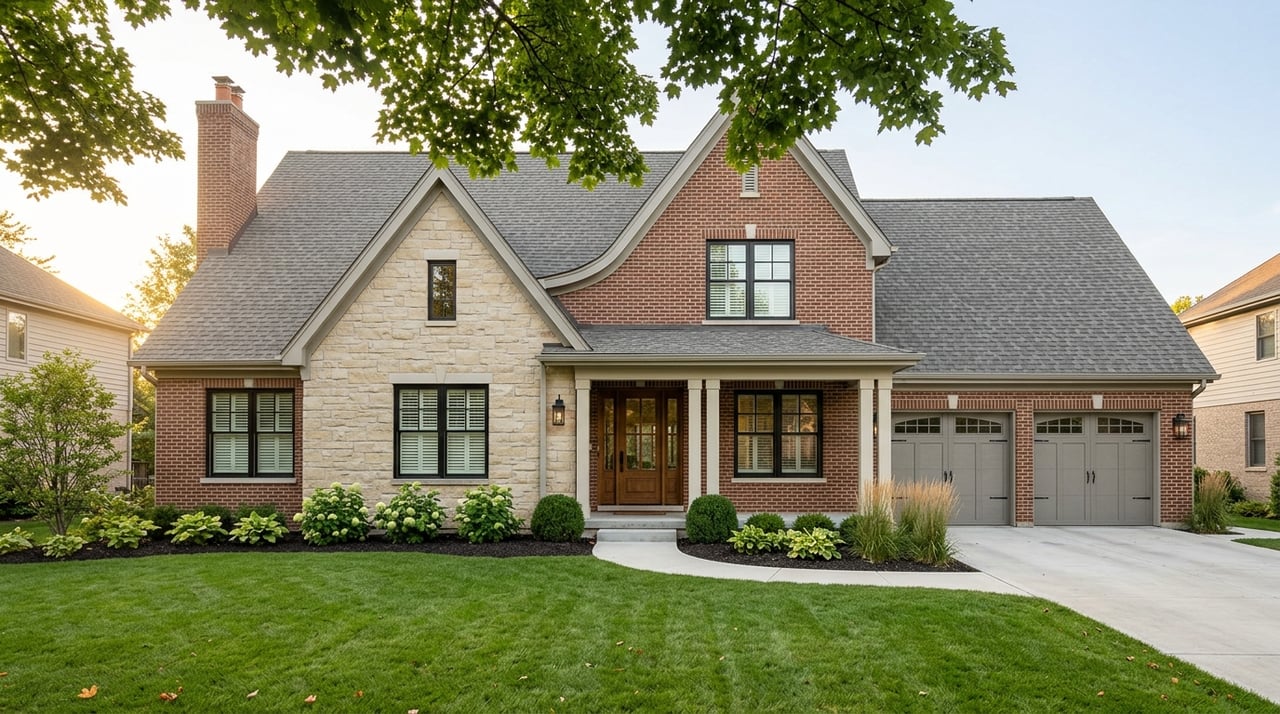
Wondering if Elburn gives you the extra space you want without pushing you too far from everything else? If you are moving up from a smaller home in Kane County or the western suburbs, that question is probably at the center of your search. The good news is that Elburn offers a pretty clear value story for buyers who want a detached home, more breathing room, and a residential setting with rail access. Let’s dive in.
Why move-up buyers look at Elburn
If your current home feels tight, Elburn tends to show up for one simple reason: space. The village’s housing profile is centered mostly on single-family homes, and local planning documents describe neighborhoods around downtown and newer areas as primarily detached housing.
That matters if you are trying to get more square footage, a more comfortable lot, or a newer subdivision feel. Elburn is not trying to be the densest or most urban western suburb. The village’s stated goal is to preserve its small-town character while allowing moderate, balanced growth.
What Elburn housing feels like
For many move-up buyers, Elburn feels more spacious than closer-in suburbs because so much of the housing stock is detached. The village zoning code sets a minimum net lot size of 8,000 square feet for detached single-family homes unless a project is approved differently.
That does not mean every home sits on the same type of lot. It does mean the village often reads as more open and less compressed than some communities farther east.
Single-family homes lead the market
Elburn’s comprehensive planning documents say the village housing stock is primarily single-family. If you are searching for the classic suburban move-up path, that is an important point.
Instead of sorting through a market dominated by attached housing or dense mixed-use options, you are more likely to find detached homes that align with the needs of buyers who want more bedrooms, more storage, and more yard space.
Newer options at Elburn Station
One of the biggest housing stories in town is Elburn Station. The village describes it as a 505-acre master-planned community with single-family homes and low-maintenance Village Homes.
The village’s transit-oriented development plan notes that current and planned single-family options there range from 30-40 foot alley lots to 50-80 foot standard lots. Future phases are expected to include 60-80 foot lot widths, and typical homes in the plan are about 1,800 to 2,400 square feet.
For a buyer moving up from a smaller house, that range can create flexibility. You may be able to choose between a lower-maintenance setup or a more traditional lot, depending on how much outdoor space and upkeep you want.
How Elburn compares on price
Price is usually where Elburn gets especially interesting. Based on March 2026 median sale prices, Elburn was at $435,000, compared with $475,000 in Batavia, $480,000 in Geneva, and $441,500 in St. Charles.
In percentage terms, Elburn was about 8.4% below Batavia, 9.4% below Geneva, and 1.5% below St. Charles. That does not make Elburn a bargain-basement option, but it does place it as a generally lower-priced move-up choice among these four nearby markets.
What that means for your search
If you are comparing Elburn with Geneva, Batavia, or St. Charles, the value question is not just sale price. It is also what you get for that price.
Based on the housing mix and lot-size standards, Elburn can make sense if you want a detached home and more lot than you may be likely to find in the Fox River towns. For many buyers, that trade can feel worth it when the goal is more house for the next stage of life.
The commute question matters
Elburn does have a real commuter advantage: Metra service. The UP-W line ends in Elburn, and the station at 422 E. Railroad Ave. is accessible, with 592 parking spaces across two lots and 14 ADA spaces. The village also operates commuter parking near the station.
That gives you a rail option many far-west communities do not have. For some buyers, that alone keeps Elburn firmly in the conversation.
Elburn is rail-served, but it is still far west
The trade-off is time. On the current weekday schedule, the first inbound train leaves Elburn at 4:15 a.m. and reaches Ogilvie at 5:43 a.m. Another leaves at 4:45 a.m. and arrives at 6:13 a.m.
That puts those direct trips at about 88 minutes. So yes, Elburn is commutable by train, but it is still a longer downtown ride than what you would get in closer-in western suburbs.
Who the commute works best for
If you work from home part of the week, have a flexible schedule, or simply value space more than shaving minutes off the train ride, Elburn may fit well. If your top priority is the shortest possible trip into downtown Chicago, you may find yourself looking farther east.
This is really the core Elburn decision. You are often trading convenience for more home and lot.
Elburn may be right if these priorities sound familiar
A move-up home is not just about getting bigger. It is about choosing the right next chapter for how you actually live.
Elburn may be a strong fit if you want:
- A detached single-family home
- A more residential, small-town setting
- Newer subdivision options
- More lot flexibility than you may find in some nearby suburbs
- Metra access, even with a longer ride
- A market that can compare favorably on price with Geneva, Batavia, and St. Charles
If that list sounds like your priorities, Elburn deserves a close look.
Elburn may not be right if these are your top goals
The best move-up choice is not always the one with the biggest home. It is the one that matches your daily life.
Elburn may be less ideal if you strongly prefer:
- A shorter train ride to downtown Chicago
- A denser, more walkable mixed-use environment
- A more established downtown-centered lifestyle similar to the Tri-Cities east of Elburn
Those are not flaws. They are just the trade-offs that come with Elburn’s location and housing profile.
So, is Elburn the right next step?
For many buyers, the answer is yes, especially if you are feeling squeezed in your current home and want a detached property with more breathing room. Elburn offers a housing mix that leans strongly single-family, lot standards that help the village feel more spacious, and pricing that compares well with several nearby western suburbs.
The bigger question is how you weigh space against convenience. If you can accept a longer commute in exchange for more house and a small-town residential setting, Elburn may be one of the smartest move-up options in Kane County.
If you want help comparing Elburn with Geneva, Batavia, or St. Charles based on your budget, commute, and home goals, Holzl Homes can help you make a confident next move.
FAQs
Is Elburn, Illinois a good place to look for a move-up home?
- Elburn can be a strong option for move-up buyers who want a detached single-family home, more space, and a small-town residential setting with Metra access.
How do Elburn home prices compare with Geneva, Batavia, and St. Charles?
- Using March 2026 median sale prices, Elburn was $435,000 compared with $475,000 in Batavia, $480,000 in Geneva, and $441,500 in St. Charles.
What kinds of homes are common in Elburn, Illinois?
- Elburn’s housing stock is primarily single-family homes, and local planning documents describe both established and newer neighborhoods as mainly detached housing.
Does Elburn, Illinois have Metra service?
- Yes. The UP-W Metra line terminates in Elburn, and the station includes accessible service, 592 parking spaces across two lots, and 14 ADA spaces.
How long is the train ride from Elburn to downtown Chicago?
- On the current weekday UP-W schedule, two early direct inbound trains take about 88 minutes from Elburn to Ogilvie Transportation Center.
What is Elburn Station in Elburn, Illinois?
- Elburn Station is a 505-acre master-planned community with single-family homes and low-maintenance Village Homes, with planned lot widths ranging from smaller alley lots to wider standard lots.