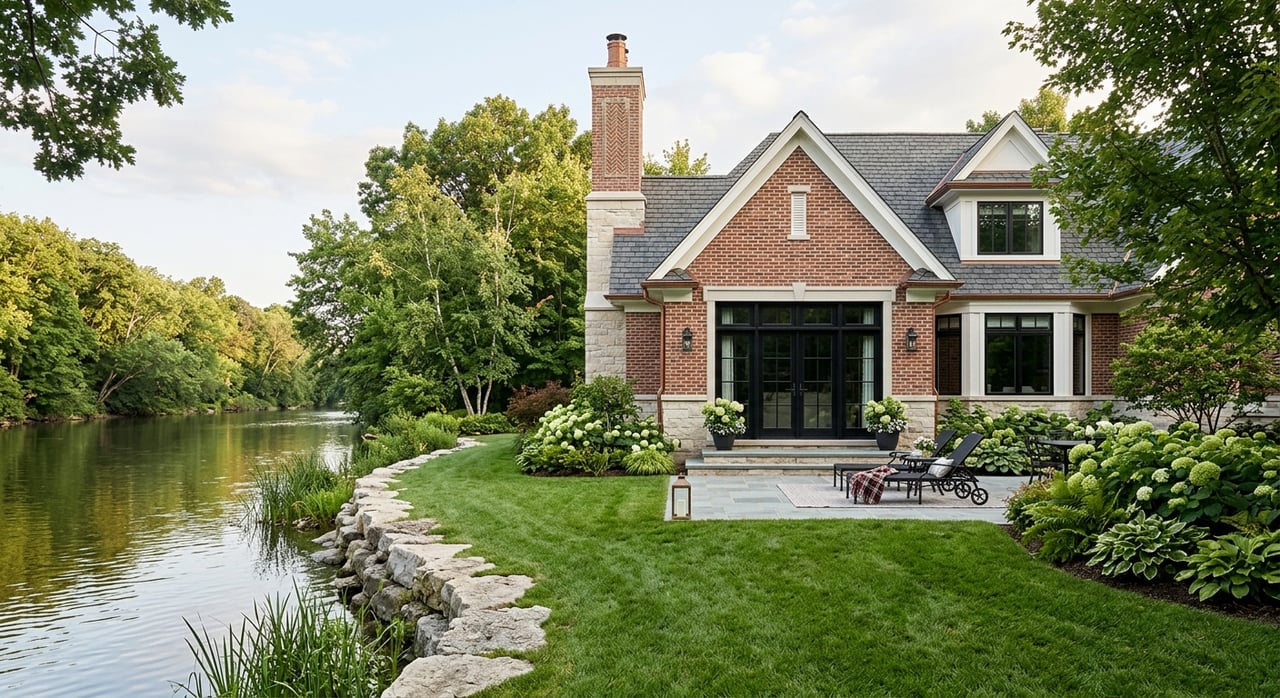
Looking for a home near the Fox River in Aurora? You are not alone. For many buyers, the draw is easy to understand: water views, trail access, historic character, and a downtown setting that feels more connected than typical suburban living. If you want to know what homes are actually like near the river, what daily life feels like, and what trade-offs to expect, this guide will help you sort through it. Let’s dive in.
Why the Fox River Shapes Aurora Living
In Aurora, the Fox River is not just a backdrop. City planning materials treat it as the center of the downtown experience, with Stolp Island, parks, trails, public spaces, and riverfront destinations all built around it.
That means river living here feels active and connected. Instead of a quiet, isolated waterfront, you get a compact corridor tied to RiverEdge Park, the Aurora Transportation Center, the library, the farmers market, kayak launch points, and the Fox River Trail.
For many buyers, that is the biggest appeal. You are not just buying a view. You are buying easier access to things to do, places to walk, and a part of Aurora with a distinct local identity.
What Homes Near the Fox River Look Like
One of the most important things to know is that river-adjacent housing in Aurora is mixed. There is no single “Fox River home style” or one standard property type.
Downtown and the immediate riverfront include condo and apartment-style options, especially along South River Street. Nearby areas on both sides of the river also include older single-family homes and mixed-use buildings.
Aurora’s historic district information shows a wide range of architecture in the river-oriented core. You may see Queen Anne, Italianate, Prairie, Tudor Revival, Colonial Revival, Bungalow, Four Square, Sears mail-order homes, Second Empire, and ranch-style homes.
That variety matters when you start your search. Two homes that are both “near the river” can offer very different lifestyles, maintenance needs, lot sizes, and price points.
Downtown condo options
If you want low-maintenance living and close access to downtown amenities, riverfront condos may stand out. Current examples on South River Street show features like balconies, elevator access, garage parking, in-unit laundry, and views tied to the river corridor.
This style of home often works well if you value convenience over private outdoor space. You may give up a large yard, but gain walkability, scenery, and easier day-to-day upkeep.
Historic homes nearby
If you prefer architectural character, the neighborhoods near the river offer more variety. Stolp Island includes Prairie and Italianate examples, while areas like Palace Street and Downer Place West include Victorian, Bungalow, Four Square, Queen Anne, Tudor Revival, Colonial Revival, and ranch homes.
These homes can offer more individuality than newer subdivisions. At the same time, older homes may bring different maintenance considerations, so it helps to evaluate condition and updates carefully.
What Homes Cost Near the River
Aurora’s citywide median listing price is about $353,950, with a median 28 days on market in the current snapshot. Within river-oriented submarkets, North River shows a median listing price around $282,250.
The river area itself has a broad pricing range. That is one reason it attracts different types of buyers.
Entry-level opportunities can include downtown condos. A current South River Street condo is listed at $179,000, while another riverfront condo is contingent at $290,000 for a two-bedroom, two-bath layout with balcony views, garage parking, elevator access, and in-unit laundry.
At the higher end, Fox Valley luxury inventory reaches into the $600,000 to $800,000-plus range, with active listings at $600,000, $699,000, and $849,000. In practical terms, that means the broader river-oriented market can support everything from first-step ownership to premium move-up homes.
What Daily Life Feels Like
The daily rhythm of living near the Fox River in Aurora is one of the area’s strongest selling points. This is a part of the city where outdoor access and downtown activity are closely tied together.
You can bike or walk the Fox River Trail, head to the Santori Library on South River Street, stop for coffee or a meal downtown, and attend concerts or events at RiverEdge Park. The downtown planning framework also highlights the farmers market, kayak access points, McCullough Park, public art, and the riverwalk as part of the normal pattern of use.
Fox Valley Park District serves Aurora, Montgomery, and North Aurora with 172 parks and 48 miles of interconnected regional trails. The Fox River Trail East and West are part of that network, which helps explain why the area feels so connected for walking, biking, and outdoor time.
If you want a suburban home base with a more active, urban-style daily routine, this setting may feel like a strong fit. If you want more separation, more land, and fewer nearby events, a different part of Aurora may suit you better.
The Main Trade-Offs to Expect
Most riverfront decisions come down to lifestyle priorities. In Aurora, the trade-off is usually walkability and scenery versus yard size and privacy.
Downtown planning emphasizes pedestrian comfort, river views, public access, and trail connections. Many current riverfront condos reflect that pattern, with balconies and shared amenities rather than expansive lawns.
That does not make one option better than another. It simply means you should be honest about how you want to live day to day.
If your ideal weekend includes walking the trail, catching a concert, or being close to downtown activity, the river corridor offers a lot. If you want a quieter setting with a larger lot and more distance from public activity, you may want to compare nearby neighborhoods beyond the immediate riverfront.
Important Due Diligence for Buyers
Living near the river comes with practical details you should not ignore. One of the biggest is floodplain and drainage risk.
Aurora’s downtown master plan states that significant portions of downtown are in 1% or 0.2% annual-chance floodplains. The city also explains that older river-adjacent neighborhoods still use combined sewers that can overflow during heavy rain or snowmelt and back up into basements.
That does not mean river-adjacent property is a poor choice. It does mean careful due diligence matters.
Before you move forward on a specific property, make sure you verify parcel-level flood hazard information and ask detailed questions about drainage history, basement conditions, and any past water issues. Buyers should also understand that the city has continued sewer separation and green-infrastructure work, while the river corridor remains a major public investment area.
Who the Fox River Lifestyle Fits Best
The Fox River area can make sense for several kinds of buyers, but it is especially appealing if you value character and connection. You may feel drawn to this area if you want a home with a more distinct setting than a standard subdivision can offer.
It may be a fit if you are looking for:
- A condo with lower exterior maintenance
- A historic home with architectural personality
- Easy access to trails, parks, and downtown destinations
- A more walkable daily routine
- A wide range of price points within one general area
It may be less ideal if your top priorities are:
- A large private yard
- Greater separation from downtown activity
- Newer, more uniform housing stock
- Fewer location-specific considerations around floodplain and drainage
Why Local Guidance Matters Here
The Fox River market in Aurora is not one-note. Home styles vary, pricing varies, and even block-to-block lifestyle can shift depending on whether you are closer to downtown, in a historic pocket, or in a more residential stretch.
That is why local context matters so much. When you are comparing a riverfront condo, a historic single-family home, or a move-up property in the broader Fox Valley area, it helps to look beyond the listing photos and understand how the location functions in daily life.
A thoughtful home search should account for walkability, housing style, maintenance expectations, and practical property-specific questions. If you are selling in or near this part of Aurora, strong positioning also matters because buyers are often comparing lifestyle as much as square footage.
If you are considering a move near the Fox River in Aurora, Holzl Homes can help you evaluate the market with a local, data-informed approach.
FAQs
What is daily life like near the Fox River in Aurora?
- Daily life near the Fox River in Aurora tends to feel active and connected, with access to trails, parks, downtown destinations, the library, community events, and riverfront gathering spaces.
What types of homes are near the Fox River in Aurora?
- Homes near the Fox River in Aurora include downtown condos, apartment-style residences, historic single-family homes, mixed-use buildings, and higher-end homes in the broader river-oriented market.
How much do homes cost near the Fox River in Aurora?
- Pricing near the Fox River in Aurora varies widely, from condos listed around $179,000 to luxury homes in the $600,000 to $800,000-plus range, depending on property type and location.
Are Fox River homes in Aurora all one style?
- No, Fox River homes in Aurora are not one style. The area includes architectural styles such as Queen Anne, Italianate, Prairie, Tudor Revival, Colonial Revival, Bungalow, Four Square, Sears homes, Second Empire, and ranch.
What should buyers check before buying near the Fox River in Aurora?
- Buyers should review parcel-level flood hazard information, ask about drainage and basement history, and understand that some older river-adjacent areas have combined sewer systems that can be affected during heavy rain or snowmelt.